By Kellie Tickner, Orchard Hills Veterinary Hospital Administrator
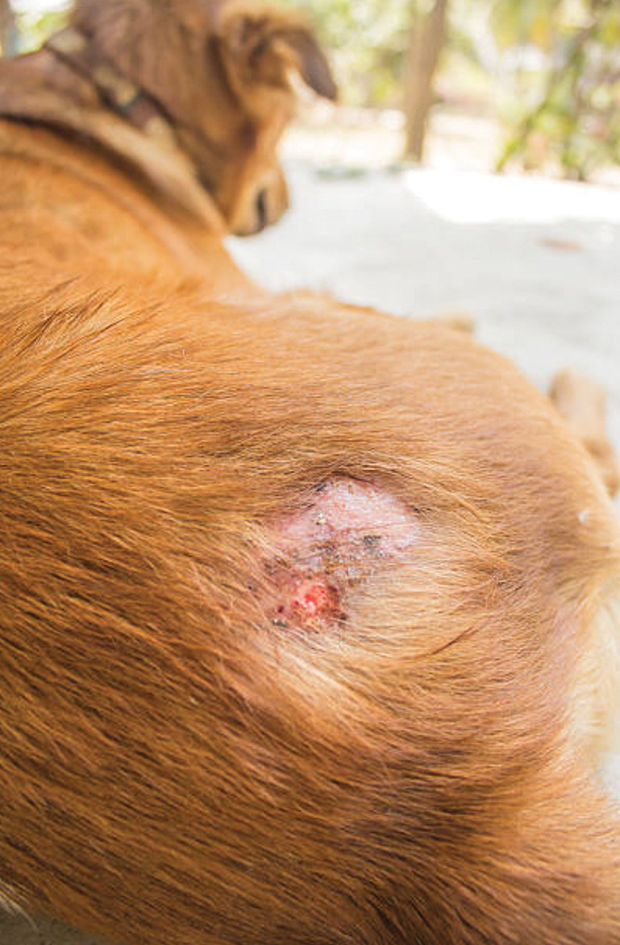
HOT spots—also known as acute moist dermatitis—can begin as a minor irritation but escalate quickly into a painful skin condition. These red, inflamed, often oozing lesions are commonly seen on the head, hips, and legs, although they can develop anywhere on the body. Without early intervention, a small area of irritation can become a large, raw wound within hours.
Most hot spots start with an itch. Dogs naturally respond by scratching, licking, or chewing at the area, which leads to further skin damage. This creates a “lick–itch–lick” cycle, where ongoing irritation drives continued self-trauma. Moisture from saliva, combined with bacteria that normally live on the skin, creates the ideal environment for infection—particularly when it becomes trapped under the coat.
Hot spots can develop remarkably quickly. In some cases, just minutes of persistent licking or chewing can create a noticeable lesion. Importantly, they are often a sign of an underlying issue. Around 30% of dogs presenting with hot spots have an associated condition such as allergies, flea infestations, ear infections, or deeper skin infections.
The location of the lesion can sometimes provide useful clues. For example, a hot spot near the ear may indicate an ear infection, while one over the hips could be linked to joint discomfort or arthritis. Dogs will often target areas of pain or irritation, unintentionally worsening the problem.
There are many potential triggers. Fleas remain a common cause, particularly in warmer conditions. Allergies—both environmental and food-related—are also frequent contributors. In addition, moisture trapped in the coat after swimming, bathing, or damp weather can increase the risk. Periods of cold, wet, foggy mornings followed by warmer days can be enough to trigger the lick–itch cycle in susceptible dogs. Matted coats, boredom, and even stress can also play a role.
Treatment focuses on stopping further trauma and supporting healing. This may involve the use of an Elizabethan collar to prevent licking, clipping the fur around the affected area to allow airflow, and gently cleaning the skin. Depending on severity, medications such as antibiotics, anti-inflammatories, or pain relief may be prescribed.
Equally important is identifying and addressing the underlying cause to reduce the risk of recurrence. This may involve flea control, allergy management, grooming adjustments, or lifestyle changes to support both physical and mental wellbeing.
Hot spots are a clear reminder of how quickly small issues can escalate. Early recognition and prompt treatment can make a significant difference to your dog’s comfort and recovery. If you notice signs of a hot spot, contact Orchard Hills Veterinary Hospital on (02) 4736 2027 for advice and support.