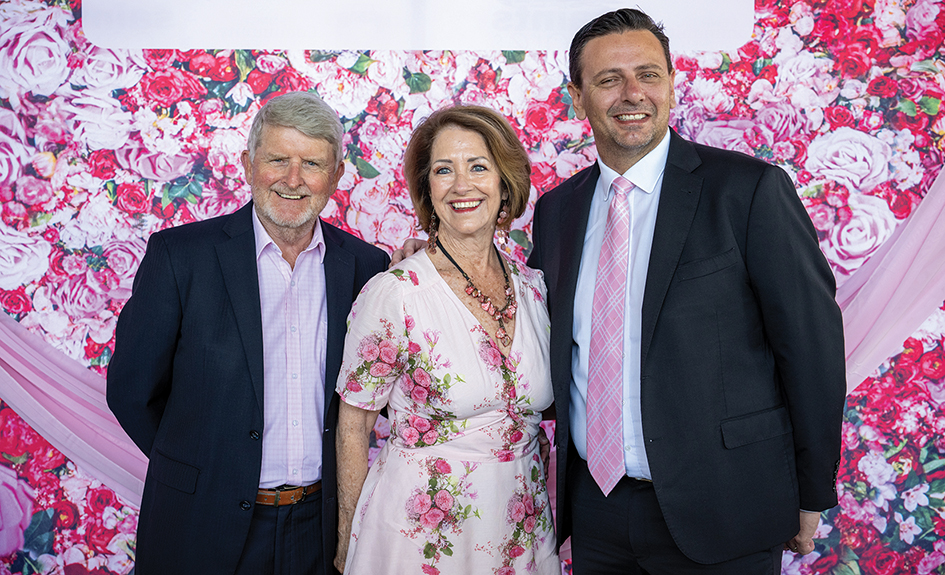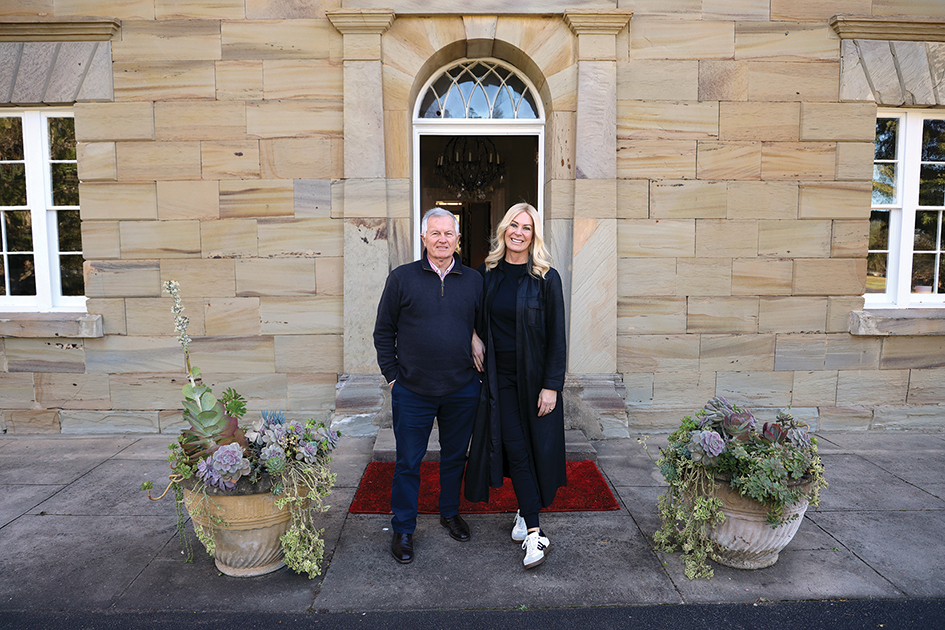
Peter and Jennine. Photos supplied.
WERRINGTON HOUSE is a living piece of Australian folklore, set on 1.85 hectares of private parkland in Rugby Street, Werrington County, and is set to hit the property market this week.
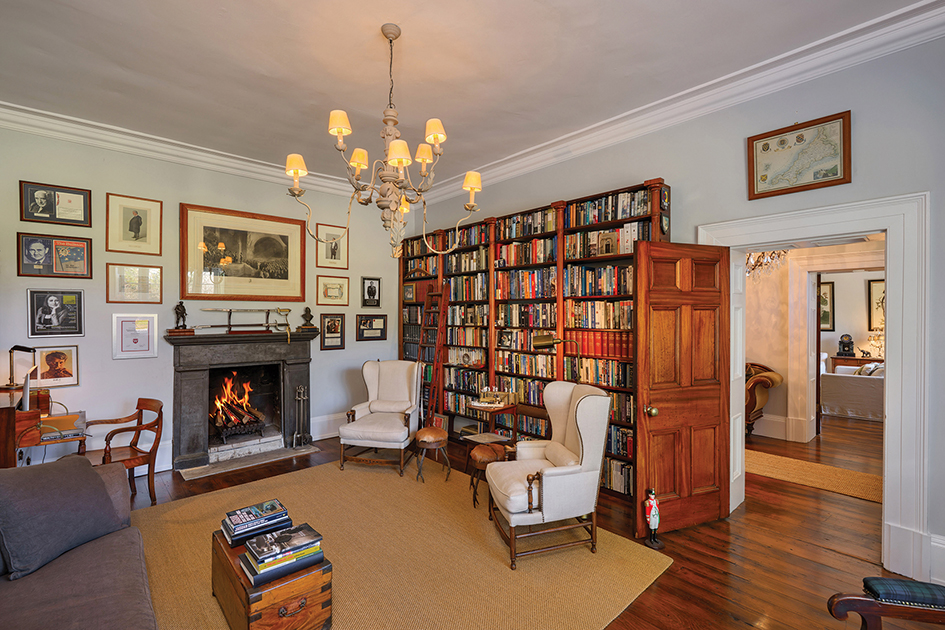
Former NSW Opposition Leader and Arts Minister, Captain the Hon Peter Collins, AM, RFD, KC, RAN (Rtd) and his wife Jennine Leonarder-Collins have spent years preserving its heritage, recently completing their 15-year restoration of the home. After purchasing the convict-built property in 2011, Peter and Jennine were dedicated to restoring it to grandeur through the Georgian architecture principals of symmetry, ensuring a rare piece of our colonial history was preserved for future generations.
Werrington House was built for Robert Copeland Lethbridge and his wife Mary King, the youngest child of Philip Gidley King, the third Governor of New South Wales. In 1806, before Governor Philip Gidley King returned to England due to ill health, he granted his children a substantial land grant in Western Sydney.
In 1826, Mary King married Robert Copeland Lethbridge in England, and the couple emigrated to New South Wales. Mary’s family had allocated 691 acres of the land grant to her – referred to as “Mary farm”. Her husband acquired an additional 600 acres taking their estate to 1291 acres in total.
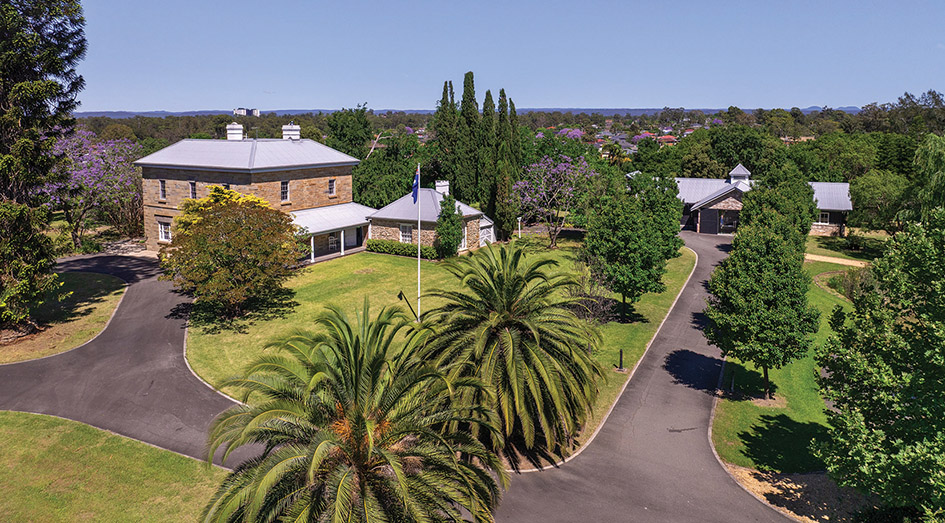
In 1829 work commenced on Werrington House and, after many setbacks, the convict-built residence was completed in 1832. Its classic Georgian design was very similar to Lethbridge’s family home in Cornwall, England.
Living on a neighbouring property, ‘Dunheved’ (also part of the King family’s land grant) were Mary’s brother, Captain Philip Parker King and his wife Harriet, a sister of Robert Copeland Lethbridge.
Werrington House was built of sandstone quarried from deposits on ‘Dunheved’. Ironbark timber was used for wall plates, rafters, shingles etc. Other building materials were imported including cedar doors, windows, wainscoting and mouldings. Apparently, the sandstone ran out before outbuildings were constructed, so these structures were built of wood (for stables) or pisé. Werrington House was completed in 1832.
In 1860 Robert Copeland Lethbridge had major financial difficulties due to setbacks and severe drought that affected farming on the estate. In order to derive income, Werrington House was leased to Australia’s Father of Federation, Sir Henry Parkes, who moved there with his wife Clarinda and six children. The Parkes family lived at the home until 1872, the year Parkes first became Premier of NSW.
Sir Henry Parkes’ tenancy left a mark on the district after he arranged for a private railway platform to be built near the property. Named Parkes Platform, it opened to the public in 1878 and was renamed Werrington in 1893 to avoid confusion with the town named after Parkes in Western NSW.
The Werrington House estate remained in the possession of Robert Copeland Lethbridge and his wife Mary until his death on 5th October 1865. Owned by Mary until her death on 17th December 1872, the property passed to their eldest son, Christopher.
Christopher and the remaining Lethbridge family members capitalised on the 1880’s Sydney railway land boom by subdividing the property. Subdivision plans were officially drawn up and filed in 1883 and 1884, carving out residential streets that still exist today such as King Street and Lethbridge Avenue.
Despite these massive land subdivisions in the 1880s, Werrington House (on almost 5 acres of surrounding land) remained with Lethbridge and King descendants for 147 years until 1979, when the property was sold to Emeritus Professor Dr Gerald von Wilpert.
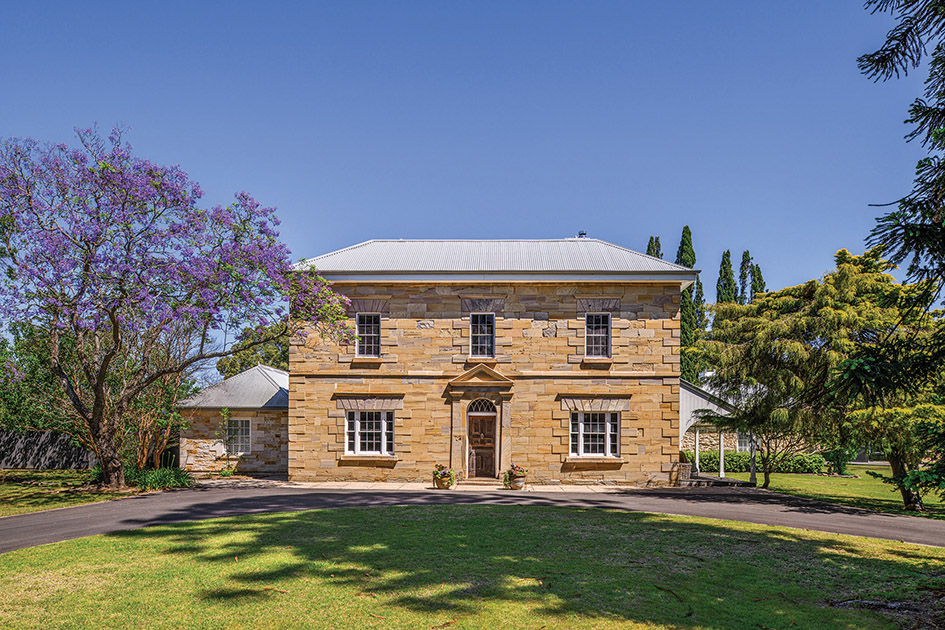
Werrington House was a finalist in the 2014 National Trust (NSW) Heritage Awards; its extensive restoration was Highly Commended in the Conservation Built Heritage: Community / Individual category. This award celebrated the dedication of private individuals and specialised tradespeople working together to safeguard one of Western Sydney’s foundational historic homesteads.
Expressions of interest can be directed to Michael Pallier 0417 371 522 or Paul Merrick on 0404 599 146.