Eurama House
By Lyn Forde – President/Research Officer of St Marys & District Historical Society Inc.
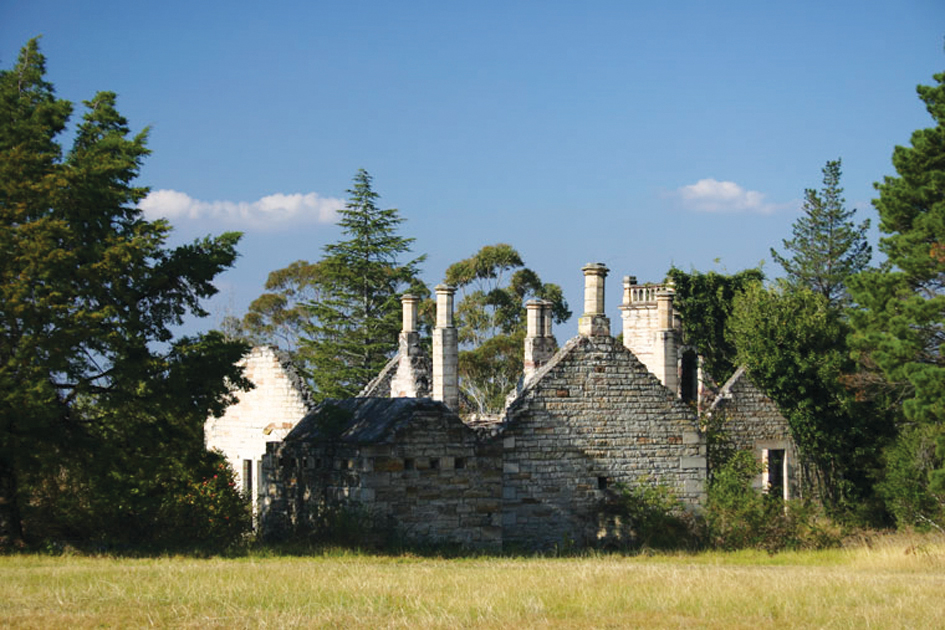
HE was the epitome of the ruthless wheeler dealer in saleable land, who always had inside information. An anti-hero of the 1870s and 1880s. He was a solicitor, conveyancer, real estate speculator and pastoralist who practised in Sydney from 1867 until 1904. He was born in Scotland in September 1820 to Thomas and Sarah McCulloch (Nee: Allan) who married in February 1816 in Glasgow. His father Thomas was born in Scotland in 1787 and came out to Australia as a convict, convicted for 14 years on the “Speke” in December 1820. His occupation at the time of sentencing was “stocking maker” (or weaver) also at this time he was considered a respectable settler. Thomas was one of 19 “Scottish Radicals” transported as part of the trials for “high treason” in Scotland under a Special Commission held at Stirling in the year 1820. The ship arrived in Sydney in May 1821. The “Radical War”, also known as the Scottish Insurrection of 1820, was a week of strikes and unrest. The end of the Napoleonic Wars brought economic depression, and in 1816 some 40,000 people attended a meeting on Glasgow Green to demand a more representative Government to end the Corn laws that kept food prices high. The industrial revolution affected handlooms (weavers in particular) and unrest grew, despite attempts by the authorities to employ jobless men and open relief centres to relieve hardship. His wife Sarah came to Australia in November 1823 on the “Jupiter” with Andrew aged three and his brother Thomas (Jnr) thanks to the Government plan to re-join relatives. Thomas (Snr) was free and living in Clarence Street in Sydney. He was fully pardoned in August 1835 and went on to make a modest contribution to the colonies as a businessman and craftsman. He was also the great-great-grandfather of Eleanor Dark the author, who wrote “The Timeless Land” in 1941. Thomas died in March 1863 at the age of 75 years and is buried at St Johns’ Anglican Church cemetery in Ashfield. Andrew married Elizabeth Thompson Griffin in 1841. The Australian newspaper in 1844 states: – Andrew Hardie McCulloch of Elizabeth Street in Sydney in the colony of NSW, at present serving under articles of Clerkship to Mr George Allen of Elizabeth street in Sydney. This gentleman is one of the Attorneys of the Supreme Court of NSW. I do intend to apply to their Honours the Judges of the said Court on the last day of the next term, to be admitted an Attorney Solicitor and Proctor of the said court. When the O’Connell Estate at St Marys was being divided up, all but sixteen hectares was sold. In 1855 some of this land (eleven lots) was sold by mortgagees to Andrew, who in 1856 re-sold to Charles Hadley, George Hope, George Dempsey, James Cummins, Henry Nash and William Cummins. In 1858 Andrew was one of two Executors’ of John Tindale’s will that was being contested in the Supreme Court by Martyn & Schroder “Auctioneer & Commission Agents” who lost their case for the amount of over £558, and were ordered to return that amount or sufficient disposable property to the Estate, but they were made insolvent. Greater access to the Blue Mountains came when the railway was extended to Weatherboard (now called Wentworth Falls) and opened in July 1867. Sir Henry Parkes bought a large acreage at Faulconbridge in 1876. Sir James Martin, who was both a friend and ministerial associate of Parkes bought a total of 900 acres in 1876-7 between Faulconbridge and Linden and adjoining Parkes’ holdings. He re-sold some of it in October 1878 to Sir Alfred Stephen (Chief Justice of the Supreme Court) who built a wooden house, but in 1882 due to financial difficulties he sold the house and land to Andrew who purchased the parcel of land for £13,000. During the nineteenth and early twentieth centuries, the owners of the properties on this estate were boasting some of the grandest gardens in NSW, developed with the guidance of the curator of the Sydney Botanic Gardens. The estate had a fascinating history created by some of Australia’s political, educational and social elite. Andrew’s “Eurama” house was originally referred to as “Weemala”, an Aboriginal word meaning an expansive view but later it changed to “Eurama Castle”, a Greek word with a similar meaning. The architect of Andrew’s estate was George Mansfield and the builder was Patrick (Paddy) Ryan who had constructed the stonework that was locally quarried. Andrew furnished his country house using the exclusive Sydney firm of Lyon Cottier and Co. The gardens and a tennis court and a dam wall constructed to create a lake were set out at this time. The property was sold in 1889 to John Cliff. None of the original estate survived due to bushfires early in the twentieth century. “Eurama” stood as a stone ruin, gutted by a bush fire in 1968. In August 2015 an attempt was made to sell off the property spanning 93.56ha now called the Eurama Castle Estate (a country-style house and tower) and made up of 15 lots that holds the remains of Eurama. The place called the “playground for the rich and famous of the time” had an asking price of $1 million. The auction advertisement of the uninhabitable ruin said that “despite the house being in ruins, there are standing slabs of its original sandstone walls and established trees wrap around it. A portion of the gully that met an ornamental lake used for small sail boats is still there and there are still two swimming pools there that were cut into sandstone as well as a man-made dam from possibly 100 years ago.” In November 2015 the property was sold for $1,225,000 to the Donghua Group under mortgagee instructions. Andrew (Snr) died in January 1905 aged 84 and Elizabeth died in 1888 at their residence “Tara”, Ocean Street at Woollahra and both are buried in a vault in the Anglican section of the Waverley cemetery at Bronte. His son also Andrew Hardie McCulloch (who was the grandfather of Eleanor Dark) died in 1947 in Mosman aged 88 years and is also buried in a vault near to his parents.
Sources: Heritage Newsletter of the Blue Mountains Association of Cultural Heritage Organisations Inc, Sydney Morning Herald, The Australian, British convict transportation registers 1787-1867, Sydney Gazette 27 Nov 1823, Census of New South Wales November 1828, National Library of Australia, Trove, Ancestry, Australia Death Index, 1787-1985, NSW Government Gazette.