By Lyn Forde – President/Research Officer of St Marys & District Historical Society Inc.
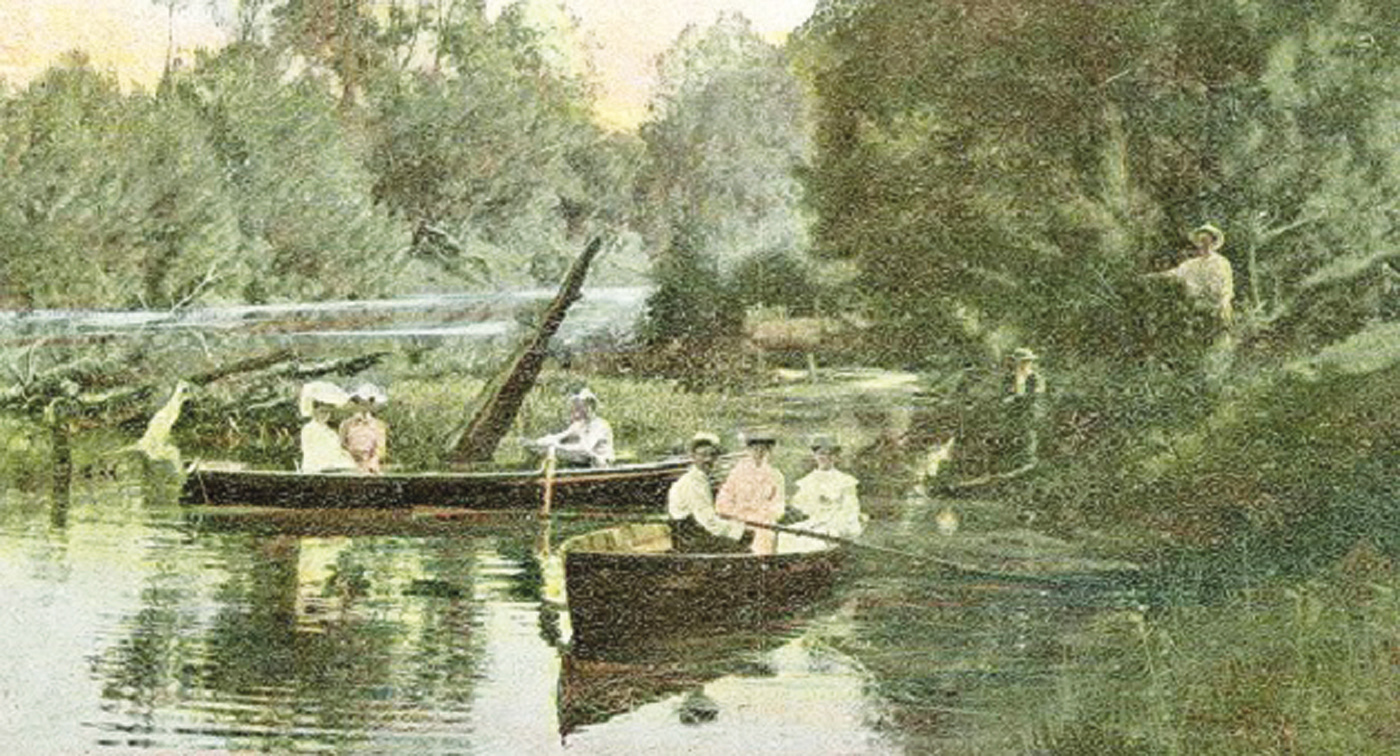
IN March 1883 an occasion of enjoyment for guests at a picnic given by the employees of the Nepean Times for their employer Alfred Colless to celebrate the first anniversary of the paper. The place selected was the picturesque head of the Nepean River, more familiarly known as the “Basin” about thirteen miles in a southerly direction from the railway bridge at Penrith. A more attractive spot for a day’s outing could not have been chosen than the junction where the Nepean and Warragamba rivers mingled and afterwards flow on as one stream. The party numbering over fifty which represented ages ranging from babyhood to “forty-odd,” with a fair proportion of both sexes which started from the wharf near the bridge and conveyed in Mr Squires’ steam launch and a few skiffs taken in tow and whose company to judge from general appearances were a “merry party” bent on a day’s enjoyment. Four miles of less interesting travelling brought them to the mountain gorge and on entering a pleasing prospect greeted the eye. On either side were precipitous hills clad in a garb of multi-tinted green that told of the effect of a glorious spring and summer that had passed. Leaving the long prospective of hills stretching out for miles until lost to the eye, the gap turns toward the west while behind lies the great plains and agricultural country that skirt the banks of the river above the bridge. The scenery increases in splendour as they proceed, the hills being much loftier affording greater shade and protection for the various herbage and trees which flourish beneath. Various large breaks in the hills are passed on the journey, all of which have been named by earlier tourists. The first which appears shortly after entering the gorge is known by the expressive name of “Glenbrook,” That tributary commences in the vicinity of the township of Glenbrook on the Western line a few miles eastward of Springwood. The next break has received the name of “Euroka” the name being a corruption of the word “Eureka,” the ideas of the original “namer” is apparent. The creek that flows through the break takes its rise a few miles from the river, its course lying through a track of cleared land that was formerly a free selection. Passing on our way the next gap of importance which we noticed was “Erskine Valley,” another spot of umbrageous wealth and picturesqueness. That vale is supposed to originate from the Kanimbla Gully in the vicinity of the Weatherboard and follows a winding course of many miles until it reaches its destination. That tributary is famous for its falls and water of unsurpassable quality. About a mile past that break, a large and at times dangerous rock appears midway in the stream. That also bears a name and likewise a history, the authenticity of which we can vouch for. The miniature island is called “The Chest of Drawers,” a very strange name no doubt for such a place but is a very appropriate one. It appears that in the earlier days when the Nepean was not patronised so extensively as a holiday resort as it has been in latter times, that a Miss ”W” in company with other females made it a practise when “doing” the Nepean on the rock for private bathing. Their amusement was repeated on various occasions and the private precincts of their bathing place was never intruded upon save by the pardonable wallaby, dingo, pheasant and other of their kinds, until on one lamentable occasion their previously secret gambols were suddenly, though unexpectedly, revealed to a party of gentlemen tourists who rounded the adjacent corner unobserved to the ladies until close at hand. The women of course had a boat close by and hurriedly collected their apparel from the rock, boarded their skiff and in the twinkling of an eye were out of the intruder’s sight round the next corner. The gentlemen, highly delighted with their adventures (their sex generally were for such adventures), awoke the neighbouring echoes with their bursts of hilarity that rebounded when the rock was reached, as found there on the topmost part was a garment that the ladies in their hurry to decamp had overlooked and caused the discoverers so much enjoyment. About another mile being traversed the scene was changed from the monotony of high and rugged hills that line the banks of the river for twelve miles to a large open area, the first view is a long track of sand but when approached more closely the rear of the sand bank becomes gently sloping banks covered with luxurious grasses and shadowing trees which afford an admirable resort for pleasure seekers and are invariably taken advantage of as “camping grounds.” This spot was the one selected for our party and after a few hours retreat from the oppressive heat which prevailed at that time, preparations were made for “the spread.” Afterwards, a non-alcoholic toast to “The health of the proprietor and success to his undertaking.” Mr Colless in responding said that he very much appreciated the action taken by his employees in honouring him in such a manner as they had done that day and he was pleased to say, without any thought of boastfulness that at that time the Nepean Times would compare favourably with any other country newspaper in the colony and he thanked his employees for the cordiality and good feeling expressed towards him”. Other toasts followed by Charles McDonald, Mr Ackroyd to the health of Mr T R Smith MLA who was pleased to be present at the picnic and acknowledged the honour conferred on him by the employees of the Nepean Times and he hoped that the occasion would be celebrated next year and he would be present to take part in such a pleasant gathering. The party then dispersed to various trysting places to spend the afternoon. Some of a more jovial mood “tripped the light fantastic,” others amused themselves in pursuit of game in the stream close by, others preferred the adjacent hills to explore the vales and sylvan nooks in the vicinity of the basin or to gaze on the splendour of the waterfalls that came down from the other stream into the basin with an incessant roar while others contented themselves by remaining under the umbrage of the large eucalyptus near the first landing place. At four o’clock the company began to return to the boats and half-an-hour later were homeward bound where they had started out. The catering arrangements were under the supervision of Mr E Squires and were as could be desired. The launch had not previously accomplished such a successful trip as the party of that day was the largest it had conveyed but it was recommended that all who desired to visit that beautiful stream to place themselves under the control of Mr Squires and to do so they would not be disappointed. Postcard from the Penrith Library.
Source: Nepean Times (Penrith, NSW : 1882 – 1962), Saturday 3 March 1883, page 2.