
By Kellie Tickner, Orchard Hills Veterinary Hospital Administrator
IT looked like nothing more than a tiny lump on Sunny’s lip. But that seemingly harmless lump was hiding a potentially deadly threat.
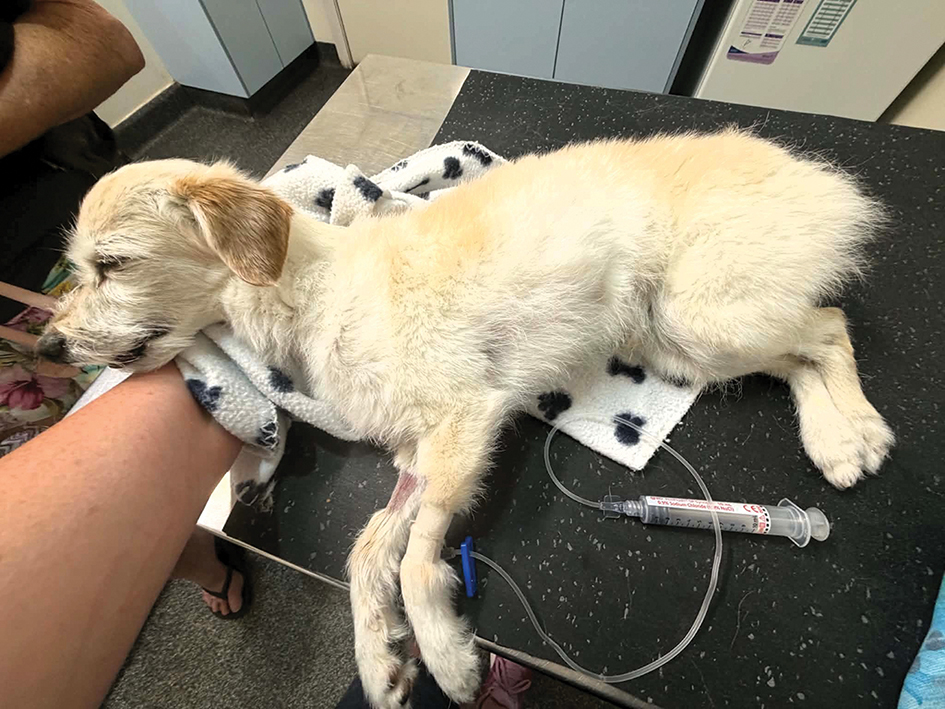
Sunny, a seven-year-old Jack Russell Terrier, was enjoying a family holiday at South West Rocks when, after a day at the beach, his owners noticed something unusual on his upper lip. They took a closer look and quickly realised the “lump” was an engorged paralysis tick.
They acted immediately, rushing Sunny to the vet for emergency treatment.
What makes Sunny’s story particularly important is that he was already receiving tick prevention. His owners had done the right thing, yet a paralysis tick had still managed to attach and, over the following day, become engorged as it fed, injecting deadly neurotoxins into his system.
Sunny’s frightening experience is a reminder that tick prevention is essential — but it is not a guarantee. Australia is home to around 75 species of ticks, but the paralysis tick (Ixodes holocyclus) is one of the most dangerous to dogs and cats. It is predominantly found along the eastern Australian coastline, from North Queensland to Victoria.
For many pet owners, paralysis ticks may not always be front of mind. Yet tick activity occurs in areas including Winmalee, Yellow Rock and Castlereagh. Pets can encounter ticks in bushland, long grass, walking tracks and even their own backyard.
And as Sunny discovered, you don’t have to live in a tick-prone area to be at risk. Pets can pick up ticks while holidaying in coastal areas, exploring beachside reserves, bush tracks, campsites or holiday properties — and bring them home.
The paralysis tick releases a potent neurotoxin as it feeds. This toxin affects the nervous system and can cause progressive weakness, paralysis and difficulty breathing. Without rapid veterinary treatment, tick paralysis can be fatal. Early signs include weakness or wobbliness, particularly in the back legs, vomiting or retching, changes to a bark or meow, difficulty swallowing and breathing changes. These signs should always be treated as an emergency.
Regular tick searches are therefore vital. Run your hands through your pet’s coat, checking carefully around the head, ears, neck, under the collar, between the toes, legs, stomach and tail. After a holiday, make a thorough tick search part of your return-home routine.
Sunny’s owners were vigilant. They spotted something unusual, took a closer look and acted quickly. That vigilance saved his life.
A few minutes checking your pet could make the difference between a holiday memory and a heartbreaking emergency. For more information, contact Orchard Hills Veterinary Hospital on 024736 2027.